
A Viking range is built to hold a steady, true oven temperature, so when one starts browning a sheet of cookies on one side or running ten degrees off the dial, owners assume the worst. In the Fremont kitchens we work — a lot of them remodeled around a 48-inch Viking in Mission San Jose or Centerville — the cause is almost never the costly part people picture.
Here is what an uneven Viking oven is usually telling you, and the order in which we rule things out.
A drifted sensor or a failing element, not the board
Most uneven-baking complaints trace to one of two parts. The first is the oven temperature sensor: a thin probe that tells the control how hot the cavity is. After years of a Viking running hard — and in Fremont's hot inland districts the cavity often sits at temperature in an already-warm room — that sensor can drift, so the oven reads 350 while actually holding 365 or 335. The control is doing exactly what it's told; it's just being told the wrong number.
The second is a baking or broil element that has begun to fail unevenly, putting out more heat at one end than the other. That is what produces a tray that browns hard on the left and stays pale on the right. Both are bounded, well-stocked repairs with genuine parts — and both are far more common than the control board everyone fears.
How we confirm it before replacing anything
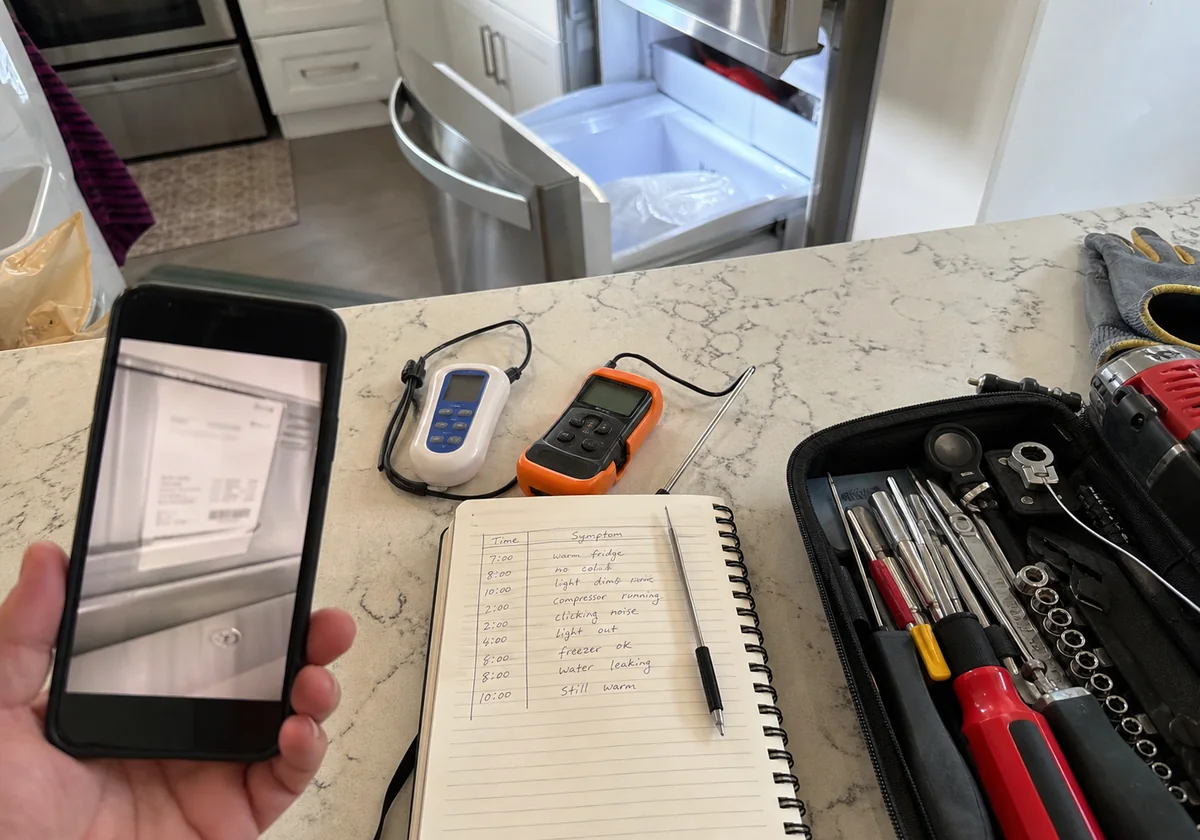
We don't swap parts on a hunch. We put a calibrated thermometer in the cavity and compare it against the dial across a full cycle to see whether the oven is actually off and by how much. We read the sensor's resistance against spec, and we check each element for an even draw end to end. Only then do we recommend a part.
That sequence matters because it separates a true fault from a calibration that just needs adjusting — sometimes the fix is a recalibration, not a replacement, and you shouldn't pay for a part you didn't need. A Viking is built to be serviced this way, which is why these ranges stay in Fremont kitchens for decades.